
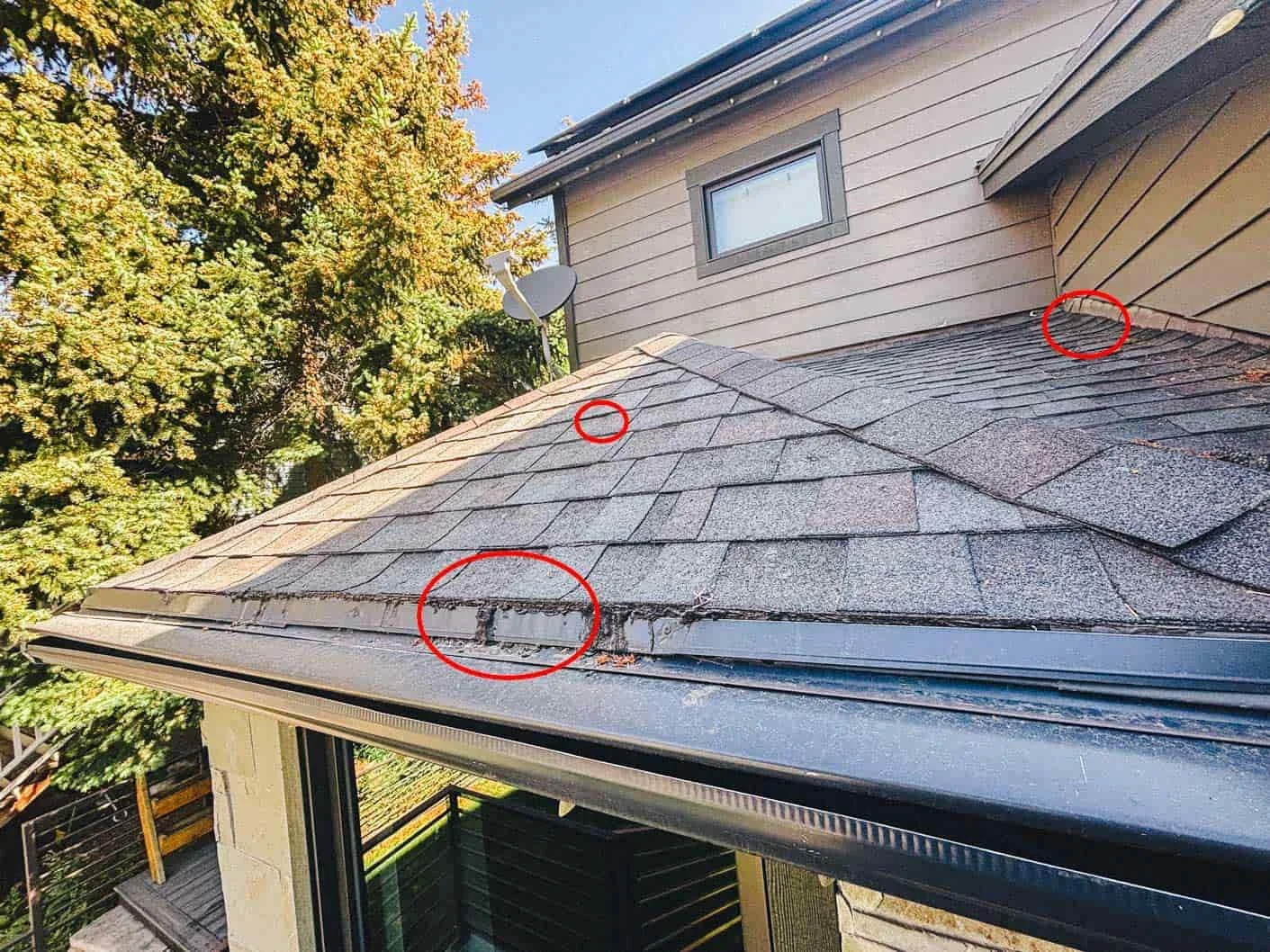
Is it time to replace your roof? How can you tell when your current roof is at the end of its life?
We get these questions from Park City homeowners every week, and for good reason.
With our (usually)long, snowy winters and intense mountain sun, having a properly functioning roof isn't just a matter of curb appeal; It's essential protection for your home or investment property.
A roof nearing the end of its life can lead to costly problems, from water damage and mold growth to compromised insulation and structural damage that could cost tens of thousand to hundreds of thousands of dollars to fix.
Your roof usually gives you plenty of warning signs before it fails completely. In this article, we'll walk through five key indicators that tell you if it might be time to invest in a new roof.
1. Granules Are Collecting in Your Gutters
One of the most east to tell signs that your shingle roof is reaching the end of its life is finding asphalt granules collecting in your gutters and downspouts.
These granules look like coarse black or gray sand, and they play a critical role in protecting your shingles from UV rays and weather damage.
Over time, all shingle roofs gradually lose some of their granules. It's a normal part of aging. However, as shingles approach the end of their lifespan, this shedding accelerates dramatically.
You may also notice bare spots on your shingles where the shingle backing is exposed.
If you're cleaning out your gutters and finding a significant buildup of granules it's time to start considering a roof replacement. Without their protective asphalt granule layer, shingles deteriorate quickly and leave your home vulnerable.
2. Shingles Are Curling or Cracking
Curling and cracking shingles are another clear warning sign that your roof is wearing out and reaching the end of its life.
Take a walk around your home and inspect your roof slopes, particularly those that receive the most direct sunlight, as these areas tend to age fastest due to longer UV exposure.
There are two types of curling to watch for. The first is cupping, where the edges of the shingle turn upward.
The second is clawing, where the edges stay flat but the middle rises. Both indicate that the shingles have lost their flexibility and protective oils.
This curling occurs as shingles lose their asphalt granules and the underlying material dries out, becomes brittle, and loses its rigidity.
Once shingles begin curling or cracking, they can no longer create a watertight seal, leaving your roof susceptible to leaks, especially during Park City's heavy snow and ice conditions.
3. Roof Age
The age of your roof is often the first and most reliable indicator that replacement is on the horizon.
If you have an asphalt shingle roof that's 15 to 20 years old, it's wise to start planning for a replacement, even if it still looks okay from the ground.
Something to keep in mind is that roofing materials wear faster than manufactured stated lifespans in Park City due to UV intensity, freeze thaw cycles, snowfall, and extreme temperatures.
Lifespan varies depending on the materials used:
Architectural (dimensional) shingles: typically 15 to 25 years
Presidential Shingles: typically 30 Years
Wood shake shingles: typically 25 to 30 years with proper maintenance
Standing Seam Metal roofs: typically 40 to 70 years
Tile or slate roofs: can last 50+ years
If you know your roof's age and it's approaching the end of its expected life, it’s likely time to start planning for a new roof.
4. Missing Shingles
Missing shingles are another easy to tell sign that your roof may be nearing the end of its useful life. While a few missing shingles don't always mean you need a full replacement, they should never be ignored.
When shingles go missing, the underlying roof deck and underlayment are exposed to moisture, which can lead to leaks, rot, mold growth, fire risks, and potential structural damage
High winds, hailstorms, and heavy snow can tear shingles loose, especially as the adhesive sealant strips weaken with age. Wood shake shingles can crack, split, or blow off entirely during severe weather.
If you notice missing shingles, call a roofer promptly for an inspection. They can determine whether spot repairs will suffice or whether the damage is widespread enough to warrant a full replacement.
If shingles are blown off in multiple areas, it's a sign that the entire roof has lost its integrity.
5. Consistent Roof Leaks
If your roof leaks repeatedly, it's almost certainly time for a replacement. While a single leak from a specific cause, like damaged flashing or a fallen tree branch can often be repaired, recurring leaks throughout a roof point to a deeper, system wide problem.
Consistent leaking typically means the roofing materials have broken down to the point where they can no longer keep water out reliably.
This degradation is often not super visible from the ground but is very real beneath your roofs surface.
Roof leaks can cause extensive secondary damage, including ruined drywall and insulation, warped framing, mold growth, and even electrical hazards.
In Park City, ice dams and snowmelt make this problem especially serious. Water can back up under shingles and find its way into your home long after the storm passes.
If you're repeatedly dealing with roof leak repairs, the most cost effective long term solution is usually a full roof replacement.
Conclusion
While your roof is a part of your home that you rarely think about, it is the most important system when it comes to keeping your home protected from the weather.
If your roof is showing sign that it’s at the end of its life like: having consistent roof leaks, granules are collecting in your gutters, shingles are curling or cracking, your roofing material is reaching the end of its manufactured expected lifespan, or you have missing shingles in multiple areas, it’s likely time to start planning for a full roof replacement.